

How European Remote Workers Can Spot & Avoid International Job Scams
Common remote job scams targeting European job seekers on Telegram and WhatsApp involve fake check payments, crypto transfers, identity theft disguised as “background checks,” and upfront equipment fees. Legitimate international employers will never ask for payment to start a job, send physical checks to purchase laptop gear, or conduct entire hiring workflows via anonymous chat apps. Protect your identity and earnings by applying through verified platforms like OnlineJobsEU.
As demand for foreign-denominated remote work grows across Europe, fraudulent hiring schemes have become increasingly sophisticated. Scammers actively target young, English-speaking job seekers on platforms like Telegram, WhatsApp, and social media with offers of high hourly pay for minimal effort.
Building a successful international career requires protecting your personal data and financial security. Here is how to spot modern remote job scams, recognize high-risk channels, and verify foreign employers before signing any contract.
The Remote Scam Detection Flowchart
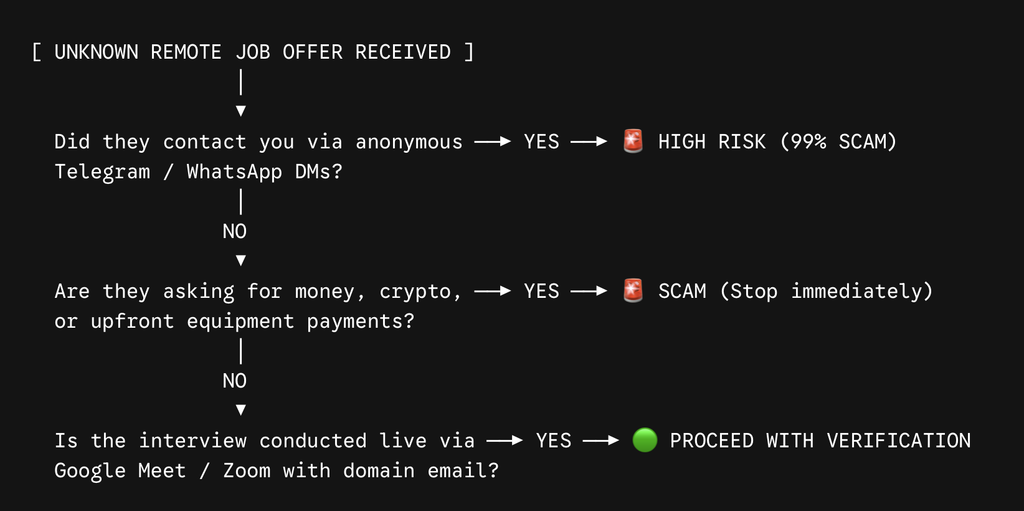
Top 4 Remote Job Scams Targeting European Candidates
Understanding the mechanics of modern hiring scams is the best way to avoid falling for them:
1. The Telegram / WhatsApp “Recruiter” Scam
- How it works: You receive an unsolicited message claiming an international brand is hiring for simple data entry, chat support, or product testing paying $30–$50/hour.
- The Trap: The entire “interview” happens over text chat without a video call. Once hired, they ask for your banking details or request a deposit to unlock your daily tasks.
- The Reality: Reputable global brands do not recruit or onboard employees exclusively through unverified Telegram accounts.
2. The Equipment Purchase / Fake Check Scam
- How it works: After a brief text-based interview, the employer offers to send you funds or a check to purchase a home office setup (MacBook, monitors, software) from their “approved vendor.”
- The Trap: The check or deposit bounces several days later—after you have already transferred real funds to their fake vendor site.
- The Reality: Real employers ship hardware directly to your address or reimburse expenses through verified payroll platforms like Wise or Revolut after work begins.
3. The “Background Fee” Identity Theft Scheme
- How it works: The recruiter requests copies of your passport, national ID, utility bill, and bank IBAN for “compliance checks” before any formal contract is signed.
- The Trap: Your identity documents are stolen and used to register fraudulent credit accounts or money-mule bank profiles across Europe.
- The Reality: Sensitive personal identification is only requested after a formal contract is offered, and always through secure, recognized HR portals.
4. Paid Training & “Application Processing” Fees
- How it works: You are accepted for an entry-level position, but told you must pay a €50–€150 fee for mandatory software licenses, training materials, or application processing.
- The Trap: Once the payment is sent via crypto, gift cards, or wire transfer, the recruiter deletes their account and disappears.
Scam vs. Legitimate Job: Safety Checklist
Use this quick checklist to evaluate any remote opportunity before sharing personal information:
| Safety Metric | 🟢 Legitimate Employer | 🔴 Red Flag / Fraud |
| Communication | Official domain emails (name@company.com) | Free domain emails (company_hr@gmail.com) or Telegram DMs |
| Interview Process | Live video call via Zoom, Google Meet, or Teams | Text-only questionnaires or audio-only messages |
| Payment Rules | Paid directly for completed work hours | Demands money, crypto, or equipment fees upfront |
| Company Presence | Active LinkedIn page, official website, verified team | Broken website, no corporate footprint, zero team details |
| Contract | Formal service agreement specifying scope & pay | Vague PDF document with generic logos |
How to Verify a Foreign Employer in 3 Steps
Before accepting any remote offer from the US, UK, UAE, or Western Europe, perform these three quick verification steps:
- Check the Domain & Email Headers: Ensure the email domain matches the company’s official website exactly. Watch out for subtle typos (e.g.,
company-jobs-hr.cominstead ofcompany.com). - Lookup the Hiring Manager on LinkedIn: Verify that the person interviewing you actually works at the company. Send them a direct message on LinkedIn to confirm they sent the offer.
- Use Dedicated European Job Networks: Reduce your exposure to unverified listings by job hunting on platforms built specifically to screen employers.
If you are new to the international remote market, start by reading our guides on how to land an international remote job with no experience and what virtual assistant rates to expect in Europe.
What to Do If You Encounter a Scam
If you realize you have interacted with a fraudulent employer:
- Stop All Contact Immediately: Block the scammer across all messaging platforms and email channels.
- Protect Your Accounts: If you shared banking details, notify your local bank immediately to freeze incoming/outgoing unauthorized transfers.
- Report the Fraud: File a report with your national cybercrime authority or report fraudulent domains directly to international reporting centers like Europol Cybercrime.
Search for Remote Work with Confidence
Building a global remote career should be empowering, not risky. By keeping your job search within verified ecosystems, insisting on clear contracts, and watching for red flags, you can secure legitimate foreign income safely.
Start your safe job search today: Browse pre-screened international remote opportunities tailored for European talent on the OnlineJobsEU Job Directory or build your verified applicant card on OnlineJobsEU Registration.
